
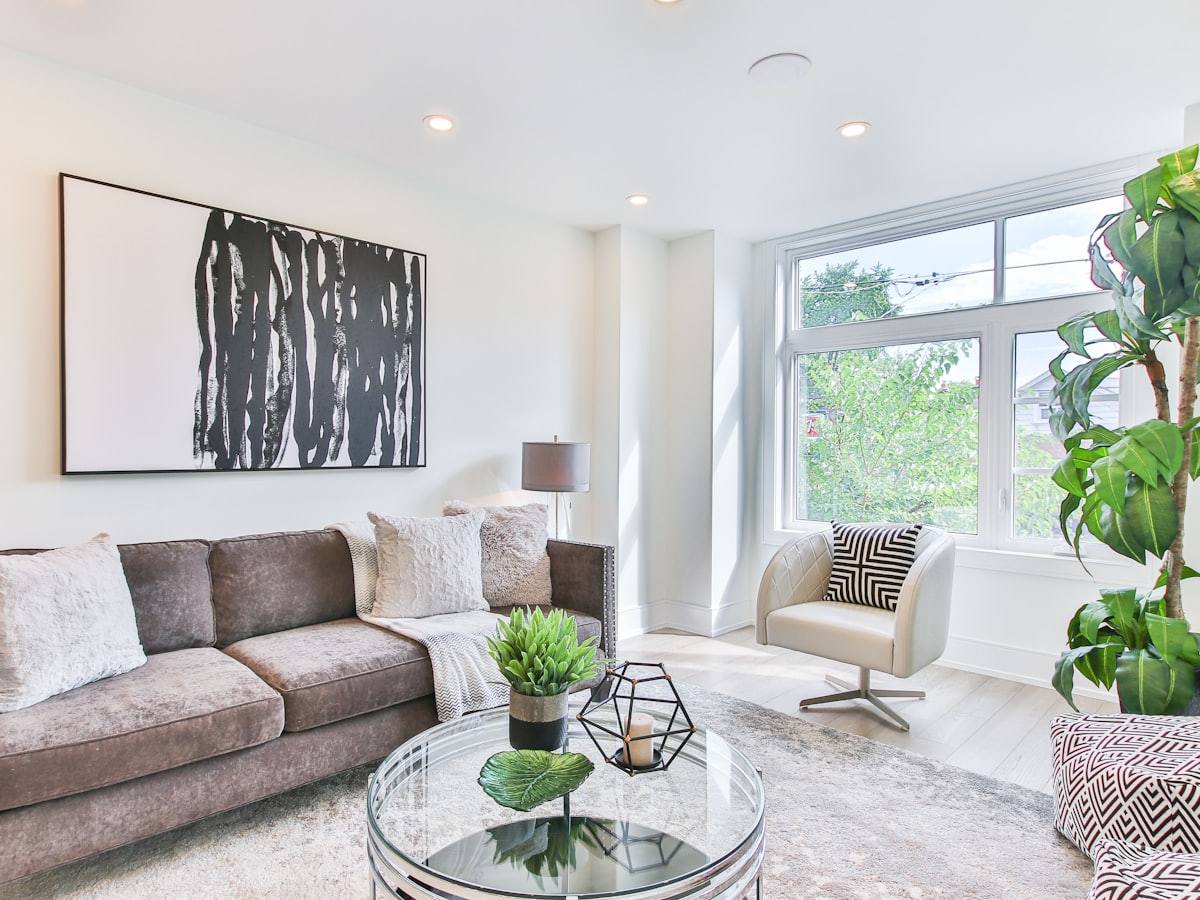
 Freshly painted interior living room
Quick answer: Interior and exterior paints are formulated for completely different jobs. Exterior paint is built to flex with temperature changes and resist UV, moisture and mildew. Interior paint is built to be scrubbable, low-odor and smooth. You should never use one in place of the other.
They might look identical in the can, but the chemistry is very different. Here’s what sets them apart and why it matters.
Those additives make exterior paint tougher — but also higher in VOCs and odor, which is exactly why you don’t want it inside your home.
Interior paint isn’t made to handle UV or moisture extremes, so using it outdoors leads to fast fading and peeling.
Some products are labeled for both and can be useful in transitional spaces like a covered porch, a garage or a sunroom. But for the main job — your living room walls or your home’s siding — a dedicated product designed for that environment will always perform better and last longer.
Sheen matters as much as the paint type. Flat and matte hide wall imperfections but are harder to clean; satin and eggshell balance durability and looks for most rooms; semi-gloss and gloss stand up to moisture and scrubbing on trim, doors, kitchens and baths.
Matching the right paint and sheen to each surface is part of what separates a lasting professional job from a quick one. When we handle your interior or exterior painting, we choose products specifically for each surface, room and exposure — so your finish looks great and holds up. Questions about your project? Get a free estimate and we’ll walk you through it.
Have a project in mind? We’d love to help.
Get a Free EstimateFree, no-pressure estimates across Central Oregon. Most quotes within 48 hours.